
Search Halifax County Genealogy Records
Halifax County genealogy records go back to 1752 when the county was created from Lunenburg County. The Circuit Court Clerk in Halifax holds court records from 1752, marriage records from 1753, land records from 1761, and probate records from 1762. Halifax County has one of the deeper genealogy archives in Southside Virginia, and the Library of Virginia's chancery records index covers the county from 1753 to 1913, providing additional searchable sources for family history research.
Halifax County Overview
Halifax County Circuit Court Clerk
The Halifax County Circuit Court is located at 8 South Main Street, Halifax, Virginia 24558. The mailing address is P.O. Box 729, Halifax, VA 24558. Clerk's Office hours are 8:30 AM to 4:30 PM, Monday through Friday. The Clerk is Hon. Cathy M. Cosby, and the office phone number is (434) 476-6211. Halifax County is part of the 10th Judicial Circuit.
The clerk's office holds the full range of genealogy records for Halifax County. Court records begin in 1752, the year the county was formed. Marriage records start in 1753 and are among the earliest surviving vital record substitutes for the county. Land records begin in 1761. Probate records, including wills and estate files, go back to 1762. Birth and death records from 1853 to 1896 are also available. This record set gives researchers access to nearly 275 years of Halifax County family history.
The clerk's office is the right first stop for any Halifax County genealogy search. Staff can point you to the appropriate index and record books. Researchers are expected to do their own searching. Copies are available at standard fees, and certified copies can be obtained for legal use. The Virginia Courts online system provides access to more recent civil and criminal case information for Halifax County.
Note: Some early census records for Halifax County are missing. The 1790 census is lost, the 1800 census is also lost, and the 1810 census was destroyed when the British occupied Washington. Researchers covering the early national period should rely on land records, tax lists, and marriage records instead.
Halifax County Genealogy Record Types
Marriage records are available from 1753, just one year after Halifax County was formed. These early marriage bonds and licenses are among the oldest surviving vital records in the county. Marriage bonds name the groom, a bondsman who guaranteed the marriage was lawful, and sometimes the bride's father or guardian. This makes them particularly useful for connecting generations and identifying family relationships in the colonial and early national period.
Land records from 1761 document nearly all property transactions in Halifax County for more than 260 years. Deed books show who owned land and who they sold it to. Following a family through multiple deeds can reveal siblings, heirs, and neighbors. Halifax County's original territory extended to the Blue Ridge Mountains, and Henry, Patrick, and Pittsylvania Counties were later formed from Halifax. This means some families who appear in early Halifax records had their later activity in one of the daughter counties.
Probate records from 1762 include wills, administration bonds, and estate inventories. An estate file is often the richest genealogical document in the courthouse because it names the deceased, the heirs, the value of the estate, and sometimes biographical details not found elsewhere. Court records from 1752 cover civil disputes, debt cases, and other legal matters. These records can include depositions and statements that give detailed information about individual lives.
Birth and death records from 1853 to 1896 are available at the courthouse. These local registers predate Virginia's statewide vital records system by several decades and are an important source for Halifax County families during that period. For records after 1912, the Virginia Department of Health holds statewide birth and death certificates.
Library of Virginia Chancery Records
The Library of Virginia's Chancery Records Index contains digitized images of Halifax County chancery records from 1753 to 1913. This is one of the longest date ranges for any Virginia county in the chancery index and covers more than 160 years of court cases. Chancery suits in Virginia typically involved equity matters such as land disputes, estate distributions, and family disagreements about property. The case files often contain extensive testimony and depositions that provide detailed family history information.
Searching the Library of Virginia chancery index is free. You search by name and county, and results link to scanned images of the original documents. For Halifax County research, cases from 1753 onward are covered, which means chancery records can supplement the marriage and land records from the county's earliest decades. Researchers who have exhausted standard courthouse sources often find the answers they need in chancery files.
The Library of Virginia also holds microfilm copies of other Halifax County records. Their online catalog is searchable for specific record types and date ranges. Physical microfilm can be requested through interlibrary loan at many libraries if you cannot visit Richmond. The Virginia Memory digital collections include Southside Virginia materials that may supplement Halifax County courthouse records.
Halifax County Image Resources
The Halifax County Circuit Court's official page at vacourts.gov shows the court's location, hours, and contact information for genealogy researchers.
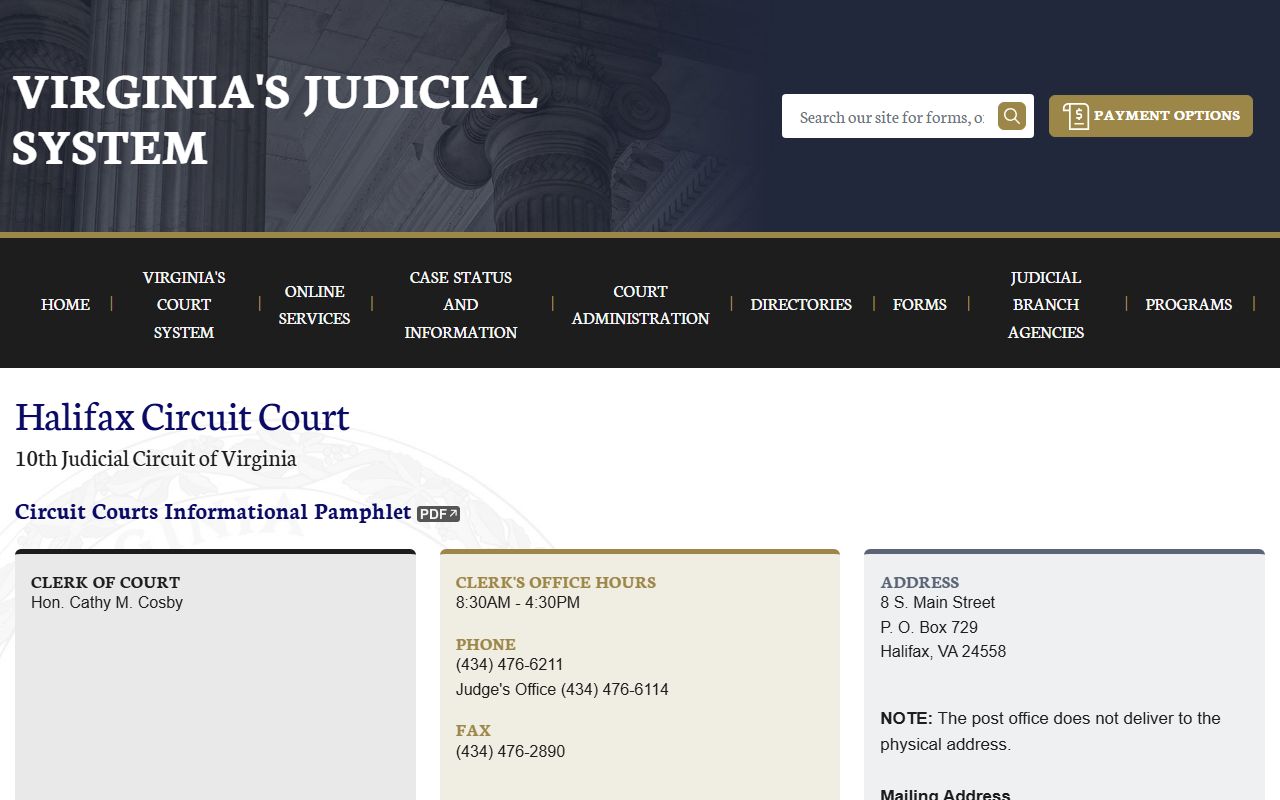
The Halifax Circuit Court holds records going back to 1752, with marriage records from 1753 and land records from 1761, making it one of the older record sets in Southside Virginia.
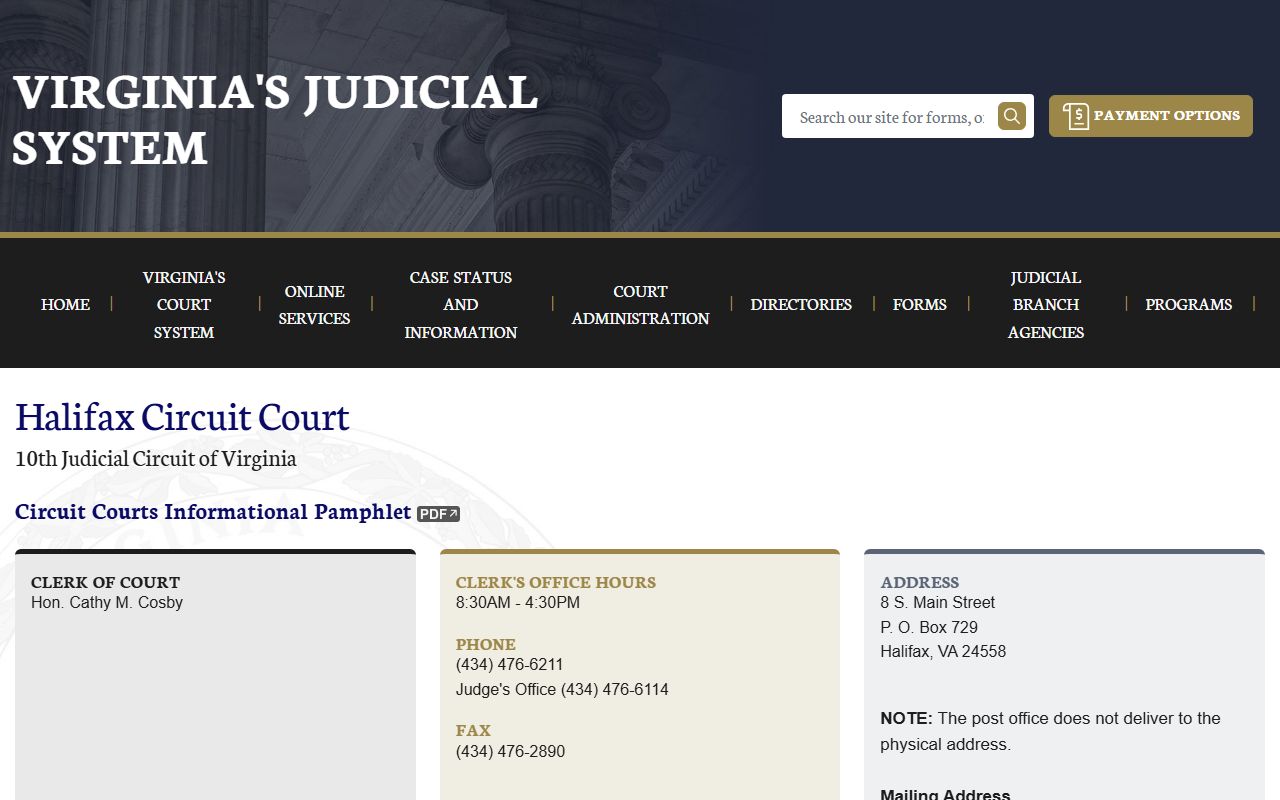
Researchers visiting the Halifax courthouse at 8 South Main Street can access court records, land files, and probate documents in person during regular business hours.
Additional Resources for Halifax County Research
The missing census records from 1790, 1800, and 1810 are a challenge for researchers covering the early national period. Tax lists are the best substitute. Virginia personal property tax records from the 1780s and 1790s are available at the Library of Virginia and through FamilySearch. These lists name heads of household, and some surviving tax records for Halifax County extend back into the late 1700s. Combined with land records and marriage bonds from the same period, tax lists can fill much of the gap left by the lost censuses.
The Virginia Genealogical Society has published guides and maintains databases with Halifax County material. Cemetery records on Find A Grave document a large number of Halifax County burials, including many rural family cemeteries that are not officially recorded elsewhere. For vital records after 1912, contact the Virginia Department of Health.
For records that predate Halifax County's 1752 formation, Lunenburg County holds the relevant archive. Lunenburg County was itself formed from Brunswick County in 1745, so very early families in this part of Virginia may appear in multiple predecessor county records. Tracking a family backward through the county formation sequence is sometimes necessary to find the oldest documents.
Note: Virginia's vital records statutes govern access to birth and death certificates. Courthouse records from 1752 onward are generally open to the public for genealogy research.
Nearby Counties
These counties border Halifax County. Each keeps genealogy records at the Circuit Court Clerk's office.