
Falls Church Genealogy Records
Falls Church is one of the smallest independent cities in the United States, and its genealogy records reflect a unique position inside the greater Northern Virginia area. Surrounded by Fairfax County and Arlington County, the city keeps its own court and vital records while sharing some services with Fairfax County. If you are tracing family lines connected to Falls Church, you can search city records, county records from the surrounding area, and statewide databases through the Virginia Department of Health and the Library of Virginia.
Falls Church Overview
Falls Church Circuit Court Clerk
Falls Church is an independent city with its own Circuit Court. The clerk's office is the first stop for court-based genealogy records, including marriage licenses, divorce filings, and civil court records. Because the city is very small, researchers often find that records for people who lived in the area may be filed in both city and county systems depending on the time period.
Virginia birth and death records from 1912 to the present are available in index form through state channels. Divorce records have been tracked since 1918, and marriage records are available from 1936 forward in state indexes. These can be accessed through the Virginia Department of Health or through the Office of Vital Records in Richmond. Qualified individuals can obtain certified copies of Virginia vital records for $12.00 per record.
The Fairfax County Office of Vital Records also serves Fairfax County and the cities of Fairfax and Falls Church. The Joseph Willard Health Center houses the Office of Vital Records for this region. Researchers who need local support for vital records in Falls Church should contact that office first before going directly to Richmond.
Note: Because Falls Church is so small, many older records may actually be held under Fairfax County jurisdiction in older filing systems.
Vital Documents in Falls Church
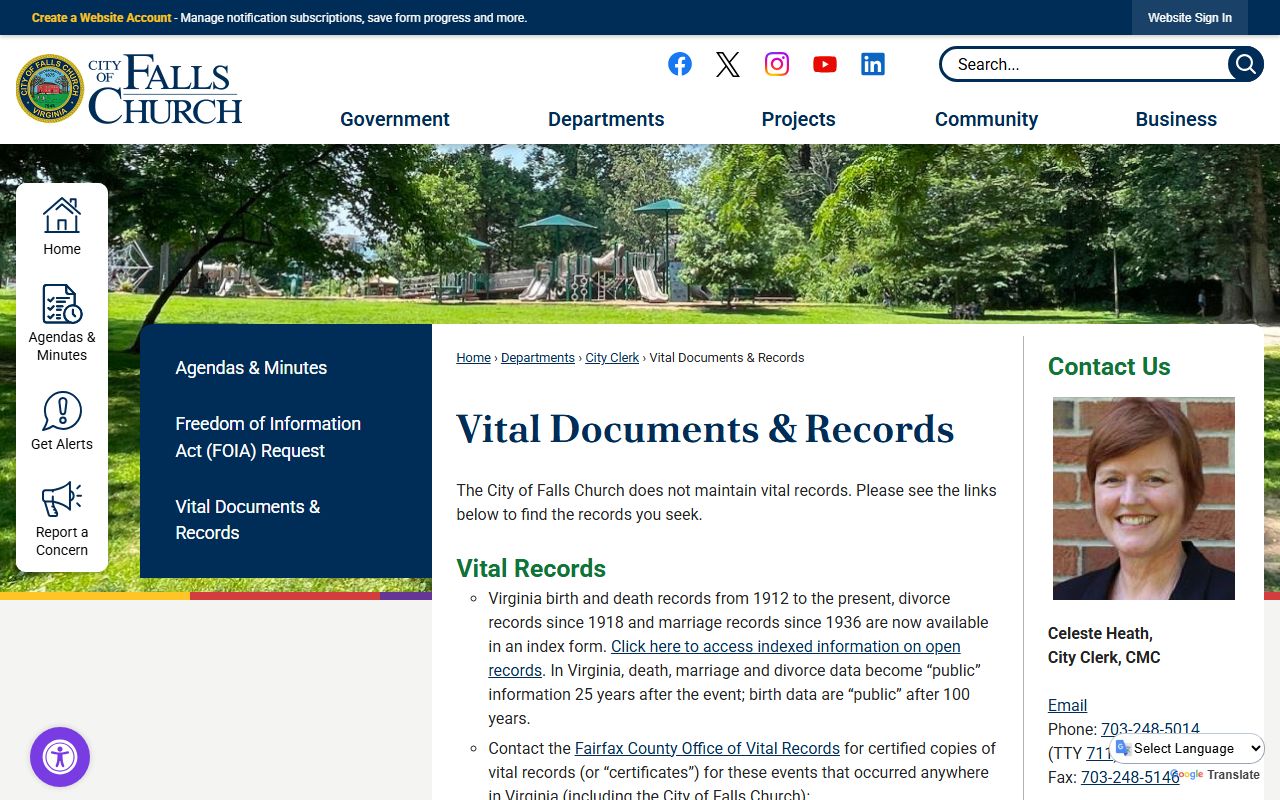
The City of Falls Church maintains access to vital records and genealogy resources through its local government pages. You can find guidance on where to get birth and death certificates, divorce records, and marriage records through the City's Vital Documents and Records page.
The lead agency for most pre-1912 vital records in Virginia is the Library of Virginia in Richmond. Statewide registration for births and deaths began in Virginia in 1912. Records from before that year are fragmented and held in local clerk offices, church registers, and historical collections. Falls Church records from before the city was formally established in 1948 may appear under Fairfax County filings.
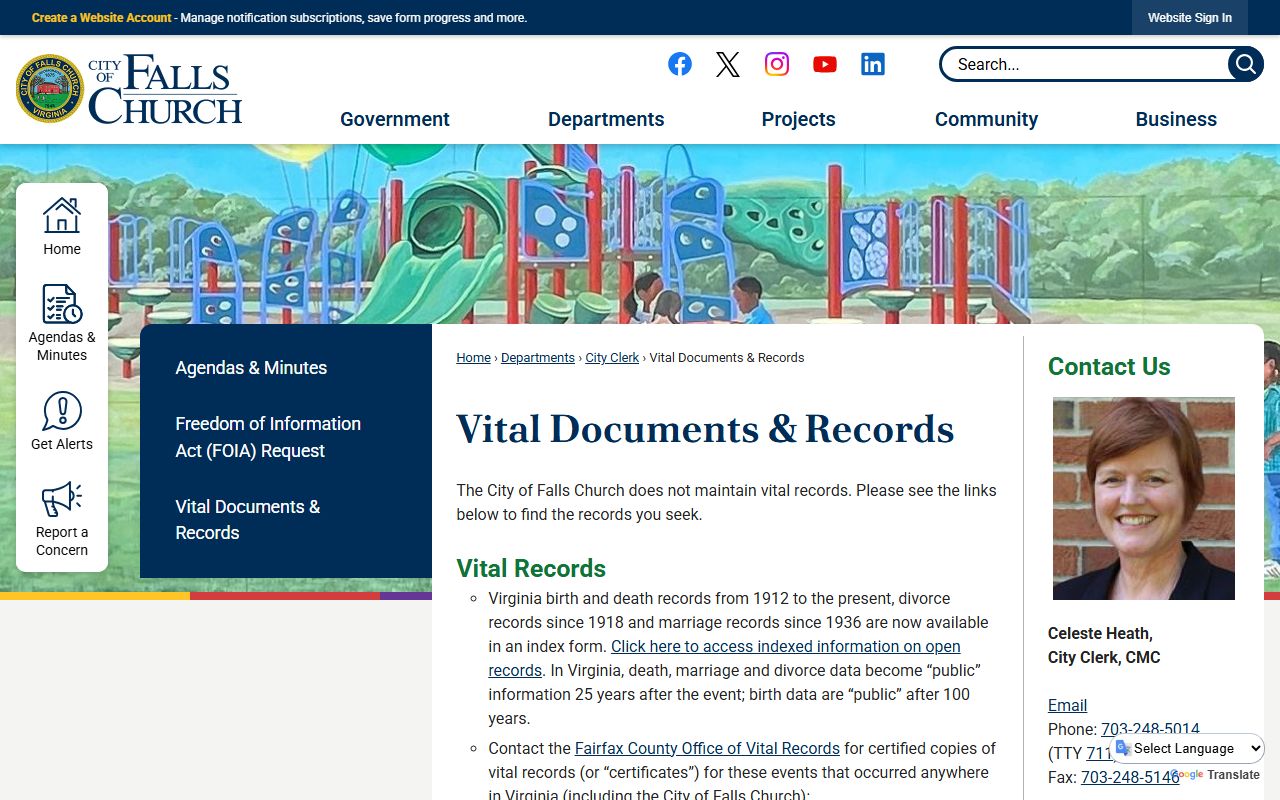
This page shows the main entry point for vital records in Falls Church. Researchers can use it to find guidance on which offices hold which records and how to request certified copies.
Divorce records in Virginia are maintained at the circuit court level. For Falls Church, divorce filings are held at the city's Circuit Court. Statewide divorce indexes go back to 1918 and can be searched through the Library of Virginia. For older marriage and death records, the Virginia Bureau of Vital Statistics collected data from across the state beginning in 1853, though consistent statewide registration was not achieved until 1912.
Searching Falls Church Genealogy
Start your search with the Virginia Department of Health Office of Vital Records. They hold certified birth and death records from June 1912 forward. For genealogy purposes, you can access older index records without being a direct relative. Certified copies for legal use carry identity requirements and a $12 fee per record.
For court records, the Falls Church Circuit Court Clerk's office can help you find marriage licenses, divorce decrees, and civil case files. Because the city only became independent in 1948, researchers tracing families back to the early 1900s will likely need to search Fairfax County records as well. The Fairfax County Circuit Court holds a deep archive of land and court records that predate the city's establishment.
After reviewing the city's records, the next step for most researchers is the Library of Virginia. The LVA holds a large digital and microfilm collection that includes Fairfax County records going back to the 1700s. Tax lists, personal property records, and early deed books can help fill in gaps when vital records are not available. The Virginia Memory portal provides free online access to many of these collections.
Libraries and Local Resources
The Mary Riley Styles Public Library at 120 North Virginia Avenue, Falls Church, VA 22046 holds a local history collection with materials on Falls Church families and community records. The library's Virginia Room has clippings, directories, and reference materials useful for genealogy work in Northern Virginia.
For broader regional research, the Fairfax County Public Library system has a strong genealogy collection including microfilm holdings, local history books, and access to subscription databases like Ancestry and Fold3. The Virginia Room at the Fairfax City Regional Library is a well-known resource for Northern Virginia family history. Staff there are experienced with cross-jurisdictional research involving independent cities like Falls Church.
The Virginia Genealogical Society in Richmond publishes research guides and maintains a library that covers all Virginia localities. FamilySearch also maintains records for Falls Church and Fairfax County that are searchable online at no cost. Cemetery records for the Falls Church area can be found through Find A Grave.
Falls Church Record History
Falls Church became an independent city in 1948 when it separated from Fairfax County. Before that date, all court filings and vital records for the area were handled through Fairfax County. This means genealogists tracing families in Falls Church before 1948 must search Fairfax County records at the Fairfax County Circuit Court.
The city is also surrounded on other sides by Arlington County. Families who lived near the border between these jurisdictions may have records in multiple places. Cross-referencing between Falls Church city records, Fairfax County, and Arlington County is often necessary for thorough research. Tax lists and census records from the 1800s and early 1900s can help you identify where a family was living and which clerk's office would have their records.
Virginia's vital records statutes set the rules for how birth, death, and marriage records can be accessed. For the most current guidance on certified copies, contact the Virginia Department of Health directly or visit the city's records office. Older records from the courthouse are generally open to public inspection, and researchers can view them during regular business hours.
Surrounding County
Falls Church is entirely surrounded by Fairfax County. Older genealogy records for families in the Falls Church area are often filed in the county system.
Nearby Virginia Cities
These independent cities are near Falls Church and maintain their own genealogy records at their Circuit Court Clerk offices.