
Fairfax County Genealogy Records
Fairfax County, Virginia is one of the state's largest and most historically significant jurisdictions, but researchers face a critical challenge: all county court records were destroyed by fire in 1863. The Circuit Court in Fairfax holds records from after the fire and maintains a public records room with online access tools, public terminals, and subscription services. Finding Fairfax County ancestors from before 1863 requires understanding what was lost and which alternative sources survive.
Fairfax County Overview
Fairfax County Circuit Court
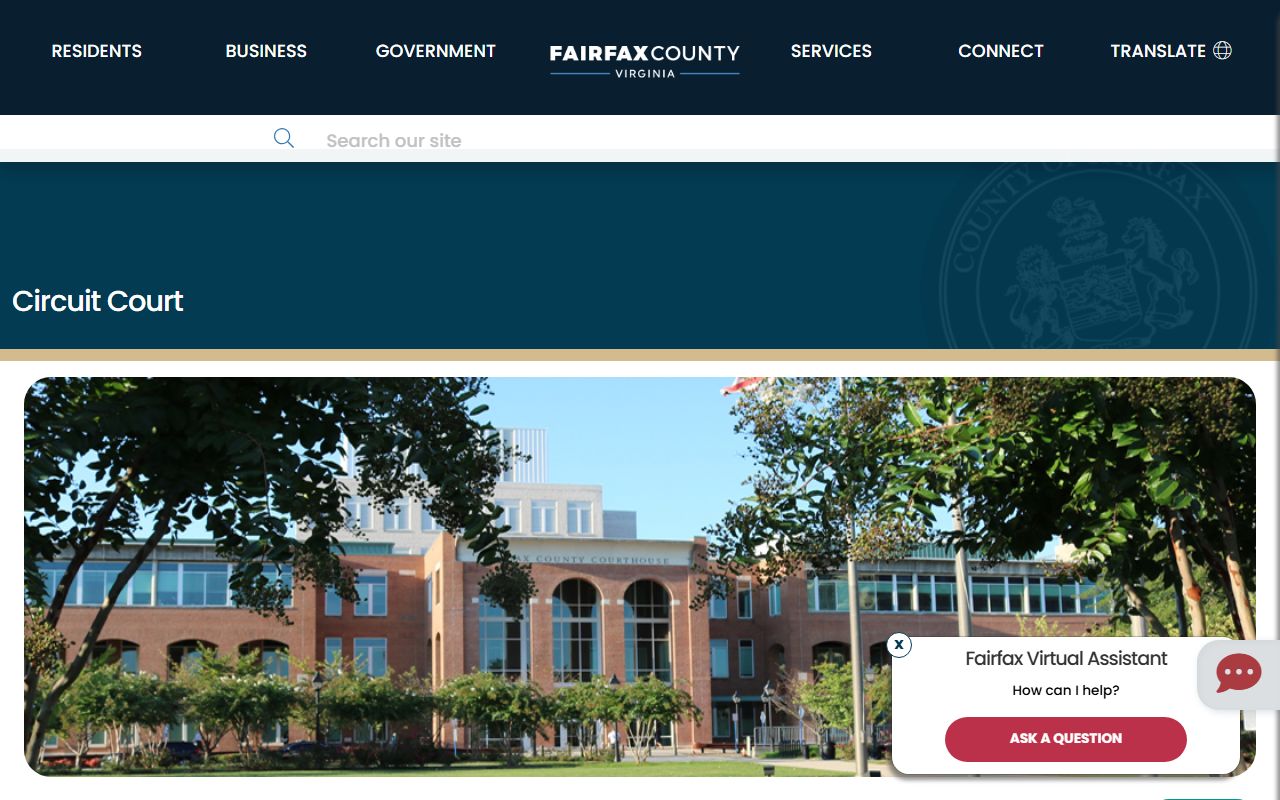
The Fairfax County Circuit Court is the trial court with the highest jurisdiction in the county and handles civil cases over $25,000, felonies, divorces, adoptions, and appeals from lower courts. The clerk's office maintains all court records including civil and criminal cases, land records, marriage licenses, and probate records. The office is at the Fairfax County Courthouse in Fairfax, Virginia.
Fairfax County was created from Prince William County on May 6, 1742 and named for Thomas Fairfax, sixth Baron Fairfax of Cameron, who held the Northern Neck Proprietary. The county grew rapidly through the 20th century and is now one of the most populous jurisdictions in Virginia. The courthouse handles a substantial volume of records and provides multiple access options for genealogy researchers.
Public access terminals are available inside the courthouse for searching case information. The clerk's office also provides online access to land records through a subscription service. The office issues marriage licenses, records deeds, probates wills, and qualifies executors and administrators. Military discharge records for veterans are also maintained at the clerk's office. Concealed handgun permits are processed through the Circuit Court Clerk.
Note: All county court records were destroyed by fire in 1863. Records from that year forward are intact and available. Researchers seeking Fairfax County genealogy from before 1863 must rely on sources held elsewhere, including the Library of Virginia, federal records, and surviving church registers.
The 1863 Courthouse Fire: What Was Destroyed
The 1863 fire destroyed all of Fairfax County's courthouse records going back to the county's formation in 1742. This includes deed books, will books, court order books, marriage bonds, and all other official county documents from the period 1742 to 1863. The loss covers more than 120 years of records and eliminates the colonial and early national periods entirely from the local courthouse collection.
The fire is believed to have occurred during the Civil War, a period when Fairfax County saw intense military activity. The courthouse and surrounding area changed hands multiple times, and documents were at risk from both combat and deliberate destruction. The result is one of the most significant record gaps among Northern Virginia counties.
Despite the courthouse fire, some Fairfax County records from before 1863 can be found through other means. The Library of Virginia holds microfilmed copies of selected Fairfax County records that were captured or preserved outside the courthouse. The LVA's collection may include older deed abstracts, will transcriptions, and other documents reconstructed from external sources after the fire.
Federal records are particularly valuable for Fairfax County genealogy before 1863. U.S. Census records from 1790 through 1860 document heads of household and family members. The census records were held at the federal level and were not destroyed in the 1863 fire. They provide the most consistent documentation of Fairfax County families from the county's early history up to the Civil War era.
Records Available After 1863
From 1863 forward, Fairfax County has a continuous and growing archive. Land records from 1863 to the present document property transactions in one of Virginia's most active real estate markets. The land records subscription service available through the clerk's office provides remote access to deeds, deeds of trust, plats, and other land instruments. This is useful for researchers tracing properties or following family land ownership chains from the Civil War period forward.
Marriage records from after 1863 include licenses and registers covering more than 160 years. Probate records from after the fire include wills, estate inventories, and administration bonds. These documents name heirs, list personal property, and identify the administrators and bondsmen who managed estates. For genealogists working on Fairfax County families from the late 19th and 20th centuries, the post-fire probate collection is an essential resource.
Birth and death registers from 1853 to 1896 may have survived the fire depending on where they were stored. Contact the clerk's office directly to confirm what vital records from the pre-statewide-registration era are currently available. Virginia's statewide birth and death registration began in 1912, and records from that year forward are held at the Virginia Department of Health Office of Vital Records.
The records created after 1863 grew substantially as Fairfax County's population expanded through the 20th century. The sheer volume of records from the modern era means that the clerk's office processes an enormous number of documents. The public access terminals and online subscription service are designed to help researchers navigate this large collection efficiently.
How to Search Fairfax County Genealogy
Start with the online resources at the Fairfax County Circuit Court. The land records subscription service provides remote access from home. Public access terminals at the courthouse are available for in-person searching. For more complex research, in-person visits allow you to request specific deed books, will books, and court order books from the post-fire period.
For the pre-1863 period, the Virginia Memory portal at the Library of Virginia is the best starting point. The LVA holds microfilmed Fairfax County records and may have digitized selected materials. The LVA also holds Virginia colonial records, patent books, and other documents that can document families in the Fairfax area from the colonial period onward.
FamilySearch has published Virginia-wide collections that include Fairfax County entries. Virginia Marriages 1660-1800 and Virginia County Marriage Records 1771-1989 are searchable at no cost. Virginia Deaths and Burials 1853-1912 covers death records from the county. Census records from 1790 through 1940 are freely available through FamilySearch and are among the most important tools for tracing Fairfax County families across the 1863 fire gap.
Virginia's vital records statutes govern access to birth and death certificates. The Virginia Courts system maintains online case indexes for more recent circuit court records. The Virginia Genealogical Society also has relevant resources for Northern Virginia research.
Alternative Sources for Pre-1863 Research
Church records are among the most valuable alternatives to the lost courthouse documents. The Episcopal Church, successor to the colonial Anglican Church, maintained registers in Fairfax County parishes. Some vestry books and parish registers survive and are held at repositories including the Library of Virginia and the Virginia Historical Society. These records can document baptisms, marriages, and burials from the 18th and early 19th centuries.
The Virginia Genealogical Society and local historical societies in Fairfax County may hold family papers, Bible records, and other private documents that were not affected by the courthouse fire. Newspaper records and cemetery inscriptions are two more independent sources of genealogical information. Find A Grave has documented many Fairfax County burials and provides an independent record of death dates and family relationships.
Federal land records and military records held at the National Archives in Washington, D.C. are particularly accessible for Fairfax County researchers given the county's proximity to the capital. Pension files, bounty land warrant applications, and other federal military records often contain detailed biographical information about veterans and their families that goes well beyond simple service documentation.
Nearby Counties
These counties border Fairfax County and each keeps its own genealogy records at the local Circuit Court Clerk's office.