
Roanoke County Virginia Genealogy
Roanoke County Virginia genealogy records date from 1838, when the county was formed from Botetourt County. The Circuit Court Clerk in Salem holds marriage, divorce, probate, court, and land records spanning nearly two centuries. The clerk's office has one of the oldest constitutional officer histories in Virginia, with roots reaching back to the 17th century colonial period.
Roanoke County Overview
Roanoke County Circuit Court Clerk
The Roanoke County Circuit Court Clerk's Office in Salem is the primary source for genealogy records in the county. The office holds marriage, divorce, probate, court, and land records all dating from 1838. The clerk's role in Virginia is one of the oldest constitutional offices in the state, with the position formally designated as an elected constitutional officer under the Virginia Constitution of 1851 with an eight-year term.
The Roanoke County Circuit Court Clerk's Office history page documents the long tradition of the office. For nearly two centuries, the Roanoke County Circuit Court has kept records with a commitment to public access and transparency. Historically, clerks focused on recording deeds, maintaining wills and probate records, and filing judgments and court orders. Today the role covers over 800 duties set out by the Code of Virginia.
Roanoke County was created from Botetourt County on May 1, 1838. The county name comes from the Indian word "Rawrenock," meaning wampum. The county seat is Salem, which serves as the home of the Circuit Court Clerk and all genealogy records for the county. Note that Roanoke County and the City of Roanoke are separate jurisdictions, each with their own records.
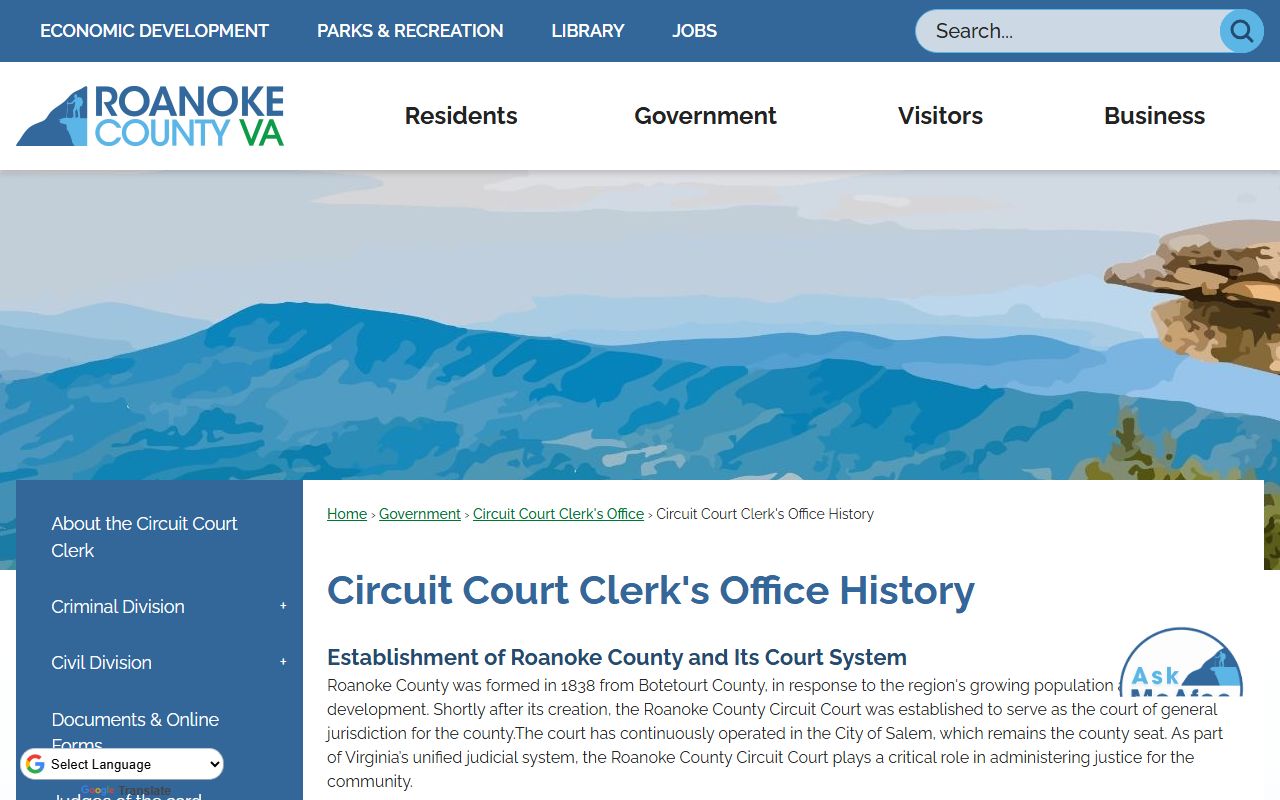
The Roanoke County Circuit Court Clerk's Office history page shown above explains how the office has evolved while keeping a continuous record of county life since 1838. This institutional continuity is one reason the Roanoke County archive is a reliable genealogy source.
Genealogy Records in Roanoke County
Roanoke County's record set covers the full range of genealogy documentation. Marriage records from 1838 let you trace family formations across the county's history. Divorce records from 1838 document family dissolutions and often contain detailed information about property, children, and residences. Probate records from 1838 include wills, inventories, and estate administration bonds that can reveal family structure across generations.
Land records from 1838 are a core genealogy source. Virginia land records document not just property ownership but often name neighbors, heirs, and family members who are parties to deeds. For researchers trying to trace family movements through the Roanoke Valley, the deed books from 1838 forward provide a continuous trail of evidence. Grantor and grantee indexes allow you to search by name across the full date range.
Court records from 1838 capture civil and criminal cases that document individuals in the county. These records sometimes include information not found anywhere else, such as descriptions of individuals, mentions of occupations, and references to family members as witnesses or parties to cases. For Roanoke County research, the court order books from 1838 are a valuable supplement to the deed and probate records.
Note: Vital records from 1912 forward, including birth and death certificates, are held by the Virginia Department of Health rather than the county clerk.
How to Search Roanoke County Records
The Circuit Court Clerk's Office in Salem is open during regular business hours Monday through Friday. In-person research gives you direct access to the full record set from 1838 forward. Bring names, approximate dates, and any family connections. The public records room is set up for self-service work, and staff can help you locate the right index books and volumes.
For land records, start with the grantor and grantee indexes to find specific deeds. These indexes run from 1838 and allow you to search by name. Once you find an entry in the index, you can pull the corresponding deed book to read the full document. Land records often lead to other family members through chains of title and neighboring property ownership.
The Virginia Memory digital collections and the Library of Virginia hold microfilmed Roanoke County records. FamilySearch and subscription services like Ancestry.com may have digitized portions of the county's older records. Using both in-person and online resources gives you the most complete access to the Roanoke County genealogy archive.
Libraries and Research Resources
The Roanoke County Public Library system serves the county and has genealogy resources including local history collections, newspaper archives, and family files. The library system's branches are distributed across the county, making local library access convenient for residents in different parts of Roanoke County.
For broader Virginia research, the Library of Virginia in Richmond holds microfilmed records and statewide genealogy resources. The Virginia Genealogical Society publishes guides and maintains databases that cover southwest Virginia counties including Roanoke County. Cemetery records are well documented on Find A Grave.
The Virginia Courts system provides current contact information and services for the Roanoke County Circuit Court. For researchers looking at records related to Botetourt County, which is the parent county of Roanoke County, the Botetourt County genealogy page covers the period before 1838 for families in this region.
Roanoke County Record History
Roanoke County was formed from Botetourt County on May 1, 1838. The county's name comes from a Native American term meaning wampum, reflecting the region's pre-colonial history. Salem became the county seat and has held that role since the county's founding. The Circuit Court Clerk's Office in Salem maintains a continuous record from 1838 without known major record losses.
The clerk's office has deep institutional roots. The Virginia Constitution of 1851 formally established the Clerk of the Circuit Court as an elected constitutional officer with an eight-year term. This formal structure helped ensure consistent record-keeping across generations of clerks. The current office carries over 800 statutory duties, but genealogy researchers are primarily interested in the deed recording, probate, and vital records functions that the office has maintained since 1838.
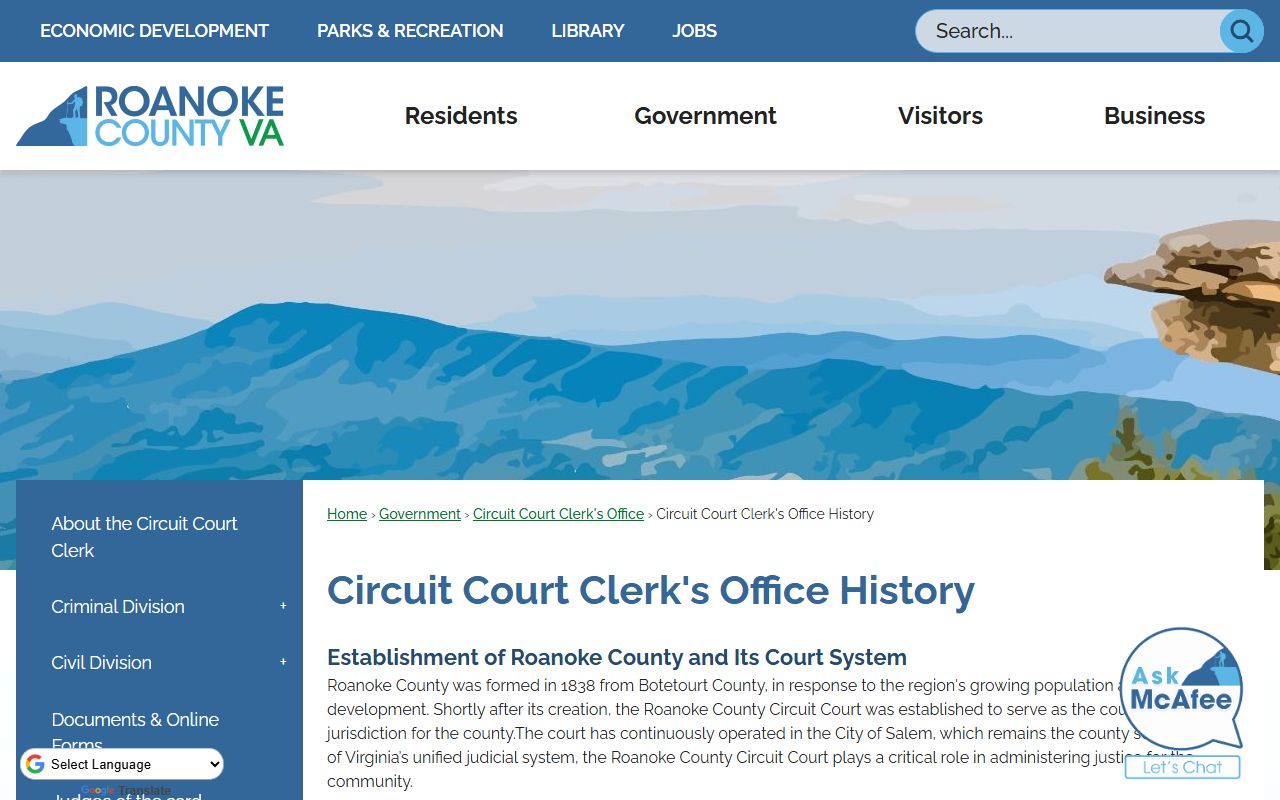
This second image from the Roanoke County Circuit Court Clerk's history page highlights the long institutional tradition of the office. The combination of nearly 200 years of records and a stable constitutional officer structure makes the Roanoke County archive a reliable source for genealogy research.
For vital records governed by state law, the Virginia vital records statutes apply. Birth and death certificates from 1912 forward are held by the Virginia Department of Health Office of Vital Records.
Nearby Counties
These counties border Roanoke County. Each maintains its own genealogy records at the local Circuit Court Clerk's office.