
Lee County Genealogy Records
Lee County sits in the far southwestern corner of Virginia, bordering both Kentucky and Tennessee, and its genealogy records draw researchers from across the tri-state region. The Circuit Court Clerk in Jonesville holds marriage, land, probate, and court records that go back to the county's formation in 1792. Whether you are tracking families who crossed the Cumberland Gap or searching for ancestors who farmed the Powell Valley, Lee County is a key stop for Appalachian Virginia family history research.
Lee County Overview
Lee County Circuit Court Clerk
The Lee County Circuit Court Clerk's office is the starting point for genealogy research in this county. The office is part of the 29th Judicial Circuit, and the current clerk is Hon. Rene Lamey. You can reach the office by phone at (276) 346-7763. Office hours run Monday through Friday, 8:30 AM to 4:30 PM. The courthouse is located in Jonesville, the county seat.
The clerk's office holds the core genealogy record types for Lee County. Marriage records, land deeds, probate files, and court orders are all maintained here. These records begin from the county's founding in 1792 and continue to the present. Land records can be searched by grantor and grantee name or by date range. Probate files include wills, estate inventories, and administration bonds. If you need a probate matter handled, the clerk's office asks that you call ahead to schedule an appointment.
Grand juries in Lee County meet on the first day of each court term, with court convening at 9:00 AM. If you are trying to locate a specific court record tied to a case, knowing the term date will help you narrow your search. The clerk's staff can point you toward the right index books, but the research work falls to you. Staff do not conduct genealogy research on your behalf.
Note: For probate matters and estate inquiries, call the clerk's office before visiting to confirm appointment availability.
Lee County Genealogy Records Available
Lee County was created on October 25, 1792 from Russell County. The county was named for Henry "Light Horse Harry" Lee, the Virginia governor and Continental Army general. Because the county formed from Russell, some early Lee County families appear in Russell County records before 1792. Checking both sets of records helps you build a complete picture of a family's history in the region.
The main record types held at the clerk's office include marriage records, land records, probate files, and court orders. Birth and death records from before 1912 are more scattered. Virginia began statewide registration of births and deaths in 1912. Prior to that year, some records were kept locally, and others survive in church registers or in the clerk's older record books. The Library of Virginia holds many pre-1912 vital records for Lee County on microfilm.
Census records for Lee County begin with the 1810 federal census. Virginia personal property tax lists from the late 1700s and early 1800s are a good substitute for earlier years. These lists record the names of free white males over a certain age, along with their taxable property. The FamilySearch database and the Library of Virginia both hold these tax records and can help you track families between census years.
Church records are particularly valuable for this part of Virginia. Baptist and Methodist congregations in Lee County kept registers of births, deaths, and marriages going back well into the 1800s. Some of these have been microfilmed and are available through the Library of Virginia or FamilySearch. Cross-referencing church records with court records often fills gaps that neither source covers on its own.
How to Search Lee County Genealogy
In-person visits to the Lee County Circuit Court Clerk are the most direct way to search original records. The public records room is set up for self-service research. You can work through deed books, will books, and court order books on your own. Staff can show you where to find the right index volumes when you arrive.
Online searching is possible for some record types. The Virginia Courts system provides case information for more recent court filings. The Virginia Memory digital collections, maintained by the Library of Virginia, include some Lee County materials. The Library of Virginia's online catalog lets you search its microfilm holdings before you visit in person or request copies by mail.
FamilySearch has indexed a portion of Lee County's older records, including some marriage and land documents. Ancestry.com may also have scanned collections covering parts of the county's history. Using multiple platforms together gives you the best shot at finding a specific ancestor. The Virginia Genealogical Society can also direct you to specialized finding aids for southwestern Virginia counties.
Note: Virginia vital records from 1912 onward are held by the Virginia Department of Health Office of Vital Records in Richmond rather than at the county clerk's office.
Local Libraries and Research Resources
The Lee County Public Library system serves researchers working on local family history. Library staff can help you navigate local history collections and newspaper archives that supplement the courthouse records. Local newspapers from the late 1800s and early 1900s often contain obituaries, marriage announcements, and legal notices that name individuals not found in any other source.
The Library of Virginia in Richmond is the state's premier genealogy resource. It holds microfilm copies of Lee County records, including deed books, will books, and marriage registers. The library also maintains the Chancery Records Index, which lets you search equity court cases from Virginia counties. These chancery suits often contain detailed family information tied to property disputes, estate settlements, and debt cases.
For cemetery research, Find A Grave has a growing number of Lee County burials documented by volunteers. Cemetery records can confirm death dates, identify family relationships, and sometimes reveal birth information not captured in other sources. Many rural cemeteries in Lee County have been surveyed by local genealogical groups whose work is available through the Library of Virginia or the Virginia Genealogical Society.
Lee County Record History and Notes
Lee County's formation from Russell County in 1792 means the earliest records for families in this area are split between two courthouses. Russell County records cover the period before Lee County was carved out. After 1792, records for the new county begin at the Jonesville courthouse. If you hit a wall in the Lee County records, checking Russell County is the logical next step.
The county's location at the Virginia-Kentucky-Tennessee border made it a transit zone for westward migration in the late 1700s and early 1800s. Many families passed through or settled briefly before moving on. Land records and tax lists can help you establish whether an ancestor was a long-term resident or a short-term settler. Deed records sometimes note where a buyer or seller came from, which can open new research leads.
The Virginia Memory portal maintained by the Library of Virginia continues to expand its digital holdings. Checking the site periodically can reveal newly digitized Lee County materials. The Library of Virginia's Chancery Records Index covers equity court suits and is searchable online. These records can be valuable for reconstructing family networks and land ownership patterns across generations.
Lee County Images
The Virginia Courts website provides information on the Lee County Circuit Court, which is part of the 29th Judicial Circuit and handles all genealogy-related court records for the county.
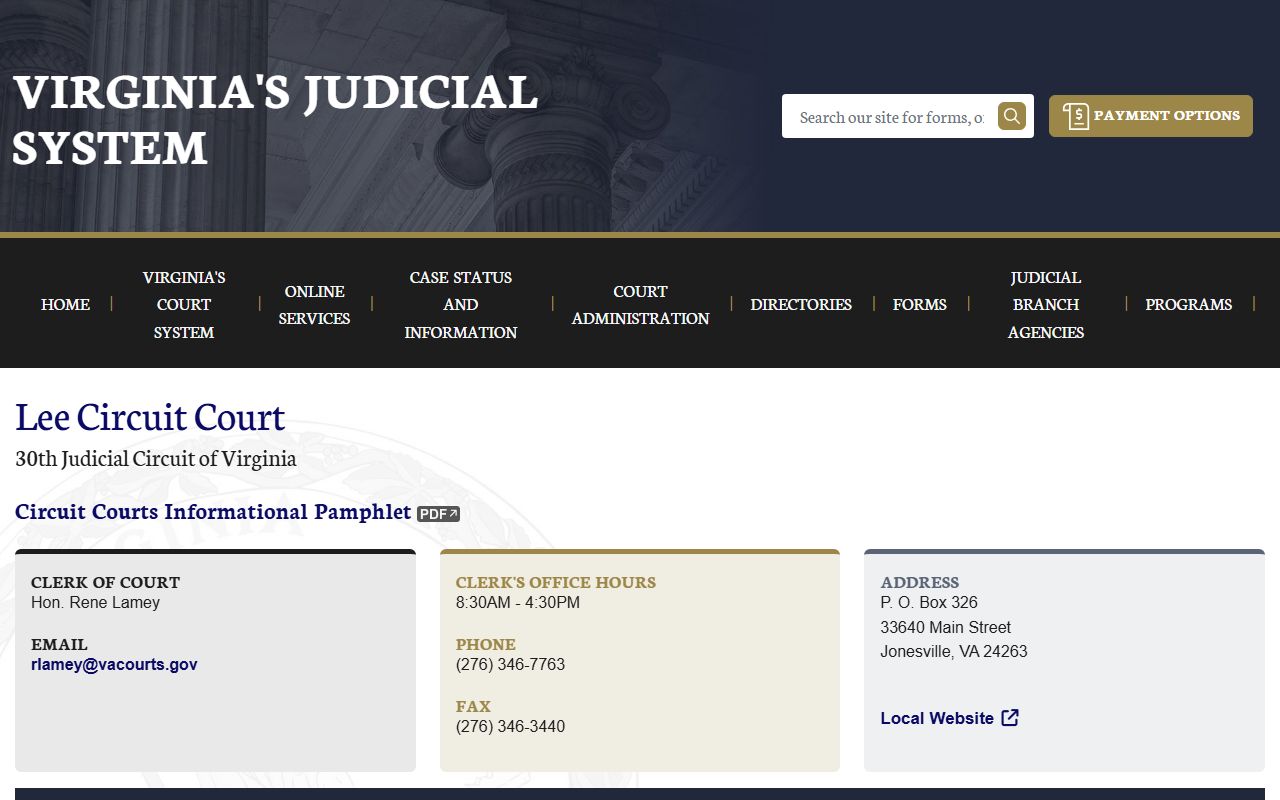
The court's page lists clerk contact details, office hours, and guidance on accessing marriage, land, probate, and court records held at the Jonesville courthouse.
Researchers can use the Virginia Courts online system as a starting point to confirm clerk contact information before visiting the Lee County courthouse in person.
Nearby Counties
These counties border Lee County or are located nearby in southwestern Virginia. Each maintains its own genealogy records at the Circuit Court Clerk's office.