
Roanoke City Genealogy Records
Roanoke City holds a strong collection of genealogy records kept at the Circuit Court Clerk's office, covering land deeds, wills, marriage licenses, court case files, and estate records. The city was carved from Botetourt County, so older family lines often run through both jurisdictions. If you are tracing roots in the Roanoke Valley, this office is your main starting point. Staff can point you to the right record sets, though the research work is yours to do.
Roanoke City Overview
Roanoke City Circuit Court Clerk
The Roanoke City Circuit Court Clerk maintains the city's official records and is the key place to search genealogy documents. The clerk is one of five constitutional officers elected by city residents. The office dates to 1619 as a Virginia institution and now holds over 800 different responsibilities. Brenda Hamilton has served as clerk since 2003. The court of general jurisdiction was established by the General Assembly and covers civil claims, criminal cases, equity matters, and appeals.
The clerk's office keeps land records, will and estate records, court case files, and marriage licenses. These are public records. You can visit in person to search them, or in some cases request copies by mail or phone. Copies of records are available for a fee; certified copies give you official documentation for legal use. The office is located in downtown Roanoke.
For pre-city records, Botetourt County is the county to check. Roanoke City was formed from Botetourt County, so family records before incorporation may be filed there. The Botetourt County clerk holds land and court records going back into the 1700s. Cross-referencing both jurisdictions gives you a fuller picture.
Note: The clerk's office does not perform genealogical research on your behalf, but staff will help you find the right record sets once you are there.
Genealogy Records in Roanoke
Roanoke City records span land deeds, wills, probate files, marriage licenses, court orders, and civil and criminal case records. The city's records begin in 1884 when it was officially established. Before that date, you need to look at Botetourt County records. The name Roanoke comes from the Native American word "Rawrenock," meaning wampum or shells used as currency. The area grew rapidly as a railroad hub in the late 1800s, which means population records, directories, and land transfer documents are especially rich from that period forward.
Birth and death records are available through the Virginia Department of Health Office of Vital Records. Statewide registration began in 1912. Older birth and death records from before that year may be held at the clerk's office or through the Library of Virginia. The Library of Virginia holds many older city and county records on microfilm and has digitized portions of those collections for online searching.
Marriage records held at the clerk's office can help you connect family lines. Estate files and will books often name children, siblings, and creditors, which makes them very useful for building out a family tree. Probate records also list property, which can help you confirm identities when names were common.
How to Search Roanoke Genealogy
The most direct way to search Roanoke genealogy records is to visit the Circuit Court Clerk's office in person. The office is open during regular business hours on weekdays. Staff can show you how to navigate the index books and deed books. The public records area is set up for self-service research.
The FamilySearch website holds digital images of some older Virginia records and is free to use. Their Virginia research wiki pages explain which records exist for each locality, when they begin, and where to find them. Ancestry and other subscription services have also indexed portions of Virginia court and vital records, including some Roanoke materials.
The Virginia Memory digital collections from the Library of Virginia include digitized newspapers, land records, and historical documents. You can search these from home. For more recent records, the Virginia Judicial System maintains online case indexes that can help you locate specific court filings.
Note: For birth and death certificates after 1912, contact the Virginia Department of Health directly, as those records are held at the state level.
Libraries and Local Resources
The Roanoke Public Library system serves city residents and includes local history and genealogy collections. The main branch has reference materials, city directories, and local newspaper archives. These supplement the court records and can help you track people between census years or confirm addresses and occupations.
The Library of Virginia in Richmond holds a deep genealogy collection covering the entire state. Their holdings include older Roanoke and Botetourt County records on microfilm, digital newspaper archives, and indexed vital records. The Library of Virginia is the best single resource for Virginia-wide genealogy work and is open to the public.
The Virginia Genealogical Society maintains a library in Richmond and offers publications, databases, and research guidance. Their resources cover Roanoke Valley families as well as statewide records. Cemetery records for Roanoke can also be found on Find A Grave, where volunteers have documented thousands of city burials.
The Roanoke City Circuit Court has jurisdiction over the full range of cases and records. Visiting in person gives you access to the full paper and microfilm archive, which is broader than what any online database currently covers.
Roanoke Record History
Roanoke was incorporated as a town in 1882 and became a city in 1884. The city grew quickly because of the Norfolk and Western Railway, which made it a major rail hub. That growth created a dense record base from the 1880s onward. Land transfers, business filings, court cases, and marriage records are all well documented from the city's early years.
The Circuit Court Clerk is the official custodian of Roanoke City's genealogy records. The office serves as recorder of deeds, decides probate matters, issues marriage licenses, and archives all court records. These functions have been part of Virginia's clerk system since 1619. The city's records are intact and have not suffered the courthouse fires that destroyed records in many other Virginia localities.
For researchers who need records from before 1884, Botetourt County is the primary source. The county clerk holds land records, wills, and court orders going back to the 1700s. Some older records have also been microfilmed and are available through the Library of Virginia and FamilySearch.
Roanoke City vs. Roanoke County
Roanoke City and Roanoke County are two separate jurisdictions. Each has its own Circuit Court Clerk and its own set of records. Do not confuse the two when searching genealogy records. If your ancestors lived in the city limits, their records are at the Roanoke City clerk's office. If they lived in the surrounding area, their records may be at the Roanoke County clerk's office.
The city is completely surrounded by Roanoke County but is legally independent from it. This is how Virginia independent cities work. Each city is its own jurisdiction with its own local government and its own courts. Researchers sometimes find records split between the two offices, especially for families who moved between the city and county over time.
The City of Salem is also nearby and is another independent city surrounded by Roanoke County. Salem has its own clerk's office as well. Checking all three jurisdictions is the most thorough approach for Roanoke Valley genealogy work.
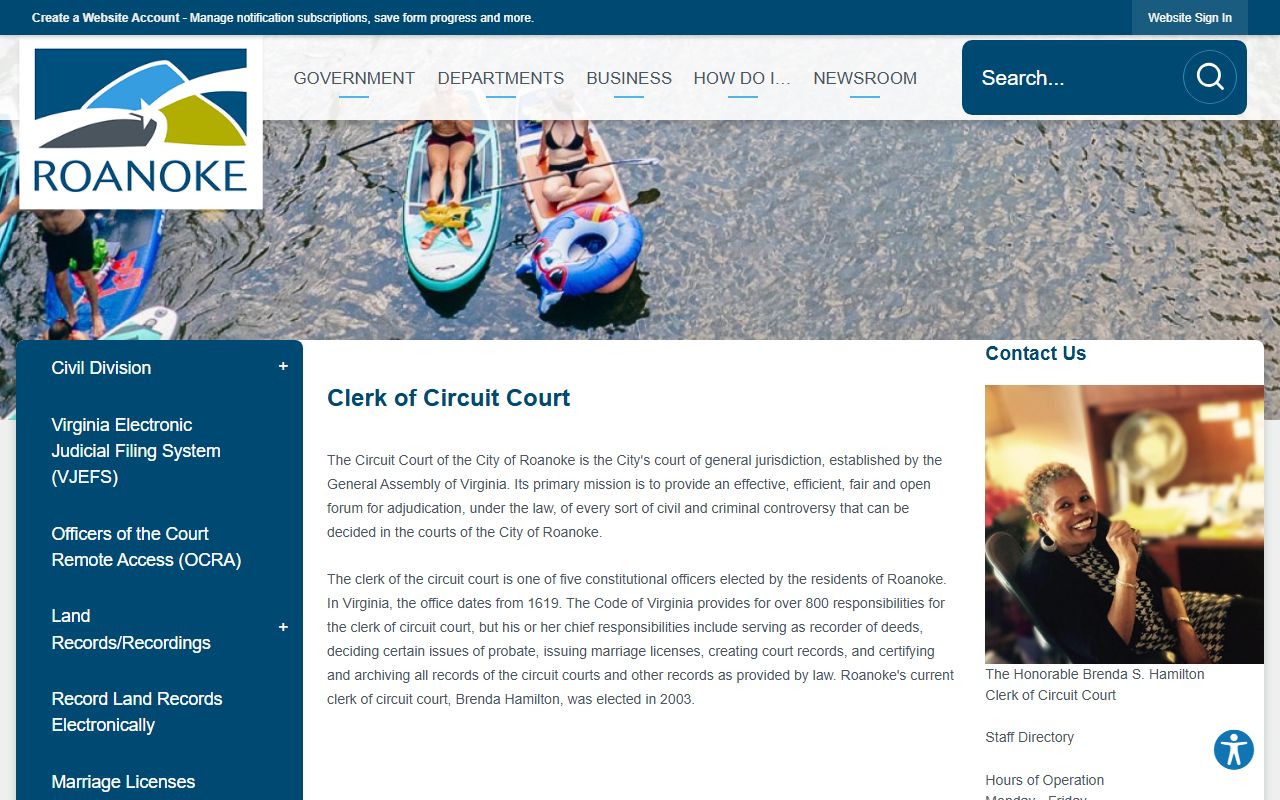
The Roanoke City Circuit Court Clerk's office maintains all land, probate, marriage, and court records for the city. Visiting this office is the best way to access the full archive of Roanoke genealogy records.
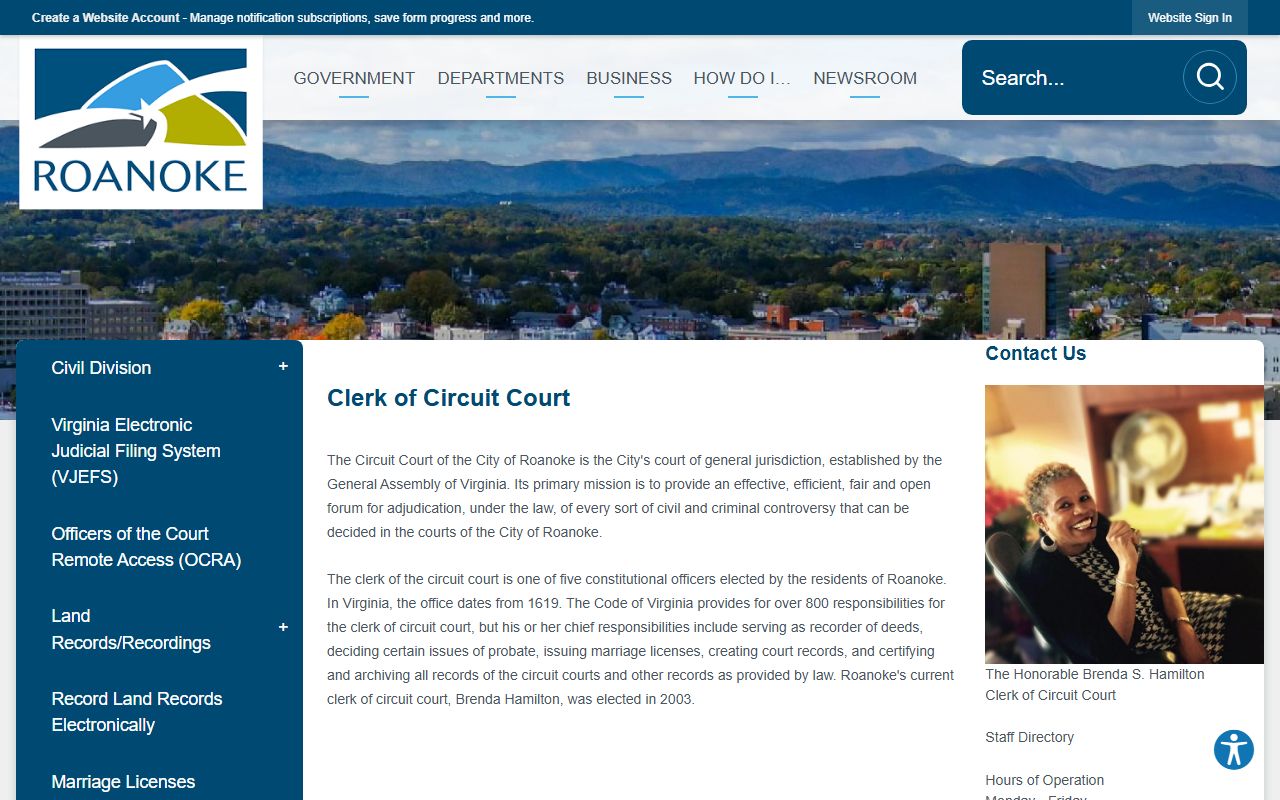
The clerk maintains a full public records room where you can search deed books, will books, and court indexes. Staff can help orient you to the collection.
Nearby Virginia Cities
These independent cities are close to Roanoke. Each maintains its own genealogy records at a separate Circuit Court Clerk's office.